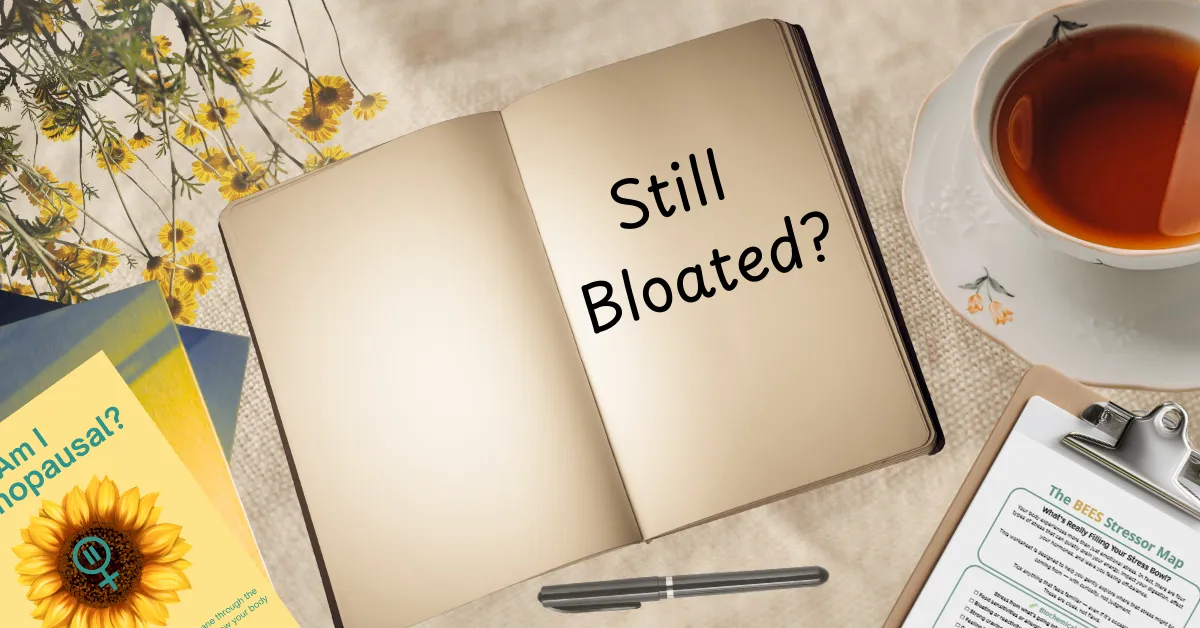
Still Bloated — Even After Doing Everything Right? Here’s Why (and What to Do About It)
If you’ve been doing all the “right” things — eating well, drinking water, managing stress — but still feel bloated, foggy, or inflamed…
You’re not alone. And you’re not doing anything wrong.
In fact, I see this all the time in women navigating perimenopause and post-menopause. Bloating is often the first symptom that becomes frustrating — because it feels unpredictable, uncomfortable, and oddly personal.
Let’s talk about why that is — and what your body might actually be trying to say.
Bloating Isn’t Just About Food
Here’s what I wish more women knew:
Bloating isn’t always caused by what you eat.Often, it’s how your whole body is coping with stress — in all its forms.
And during perimenopause and post-menopause, that stress load is usually a lot heavier than it looks on paper.
You’re juggling family, work, relationships, ageing parents, changing hormones — all while trying to do the "healthy" things and stay calm. That’s a lot for one body to hold.
So when bloating returns (even after avoiding gluten or cutting out your favourite sourdough), it’s frustrating.
But here’s what might really be going on:
🥄 It’s Not Just Digestion — It’s Your Stress Bowl Overflowing
One of the models I use in my clinic is the Stress Bowl.
Imagine your body as a bowl. Each day, different stressors fill it up:
Hormonal changes
Emotional stress
Poor sleep
Food sensitivities
Blood sugar dips
Inflammation
Environmental triggers (chemicals, noise, tech)
Physical tension or posture
When your bowl is only half full, your body can cope. But when it's full to the brim, even something small (like a slice of toast or a difficult conversation) can cause it to overflow.
That’s when you get symptoms like:
Bloating
Anxiety
Fatigue
Sleep issues
It’s not just the food. It’s the full bowl.
🧠 Why Bloating Often Shows Up First
Digestion is one of the first systems to slow down when you're under stress.
Your body can't prioritise breaking down food when it thinks you're under threat (even if that "threat" is just a cortisol spike or a busy day).
So what happens?
You stop tolerating foods you used to enjoy
You bloat after even small, healthy meals
You feel heavier, puffier, more sluggish
You crave foods that make it worse
This isn’t about removing more food. It’s about listening to the signal and reducing the overall stress load.
🌸 How Blood Sugar, Stress & Hormones Affect Digestion
Another model I often share is the Triangle of Hormonal Health, which links:
Blood sugar levels
Stress hormones (like cortisol)
Sex hormones (like oestrogen and progesterone)
These systems constantly influence each other.
When your blood sugar swings, your cortisol rises. When cortisol rises, it impacts your hormonal balance. And all of that affects your digestion, your energy, and how your body holds onto stress.
It’s not random. It’s all connected.
💡 What You Can Do Next
Here’s where to start — gently, no perfection required:
✨ 1. Download the BEES Stressor Map
This free tool helps you identify what might be silently filling your Stress Bowl — from biochemical to emotional stressors.
✨ 2. Watch the Free Workshop
🎥 Why You’re Still Bloated (Even After Doing Everything “Right”)
A short, calm training to help you:
Understand what your bloating is telling you
Learn how blood sugar and stress hormones are connected
Start calming your gut without cutting everything out
👉 Watch the Free Training here
🌻 Remember This
Your body isn’t broken. It’s just overloaded — and it’s trying to speak to you.
Once you understand your symptoms, you can give your body what it truly needs: safety, clarity, and support.
You don’t have to keep guessing. There’s a gentler way forward — and it starts here.
Still bloated, despite doing all the “right” things?
If you’ve tried changing your food but discomfort keeps returning, it can help to explore your digestion alongside your sleep, stress and daily demands.
Your First Consultation gives us 90 minutes to look at your symptoms, what you’ve already tried, and your lifestyle and relevant health information—and agree practical, personalised next steps without adding more pressure or unnecessary food restrictions.
👉 Find out about Your First Consultation
My work complements appropriate medical care; it does not replace medical diagnosis or treatment.
With warmth,
Jo
The Menopause Translator